EU AI Act risk tiers in plain words
What each EU AI Act tier means, how AIR sets it, and why a tier can stay open.
· 2 min read
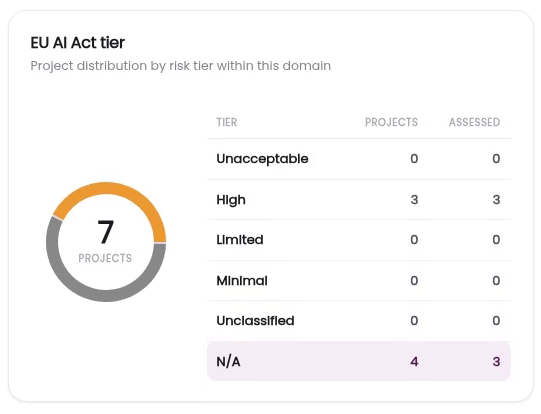
The EU AI Act sorts AI systems into risk tiers. The tier decides which duties apply. AIR sets the tier from facts it reads in your documents and from your answers to its questions.
The tiers
- Unacceptable risk. The system matches a practice the EU AI Act prohibits (Article 5). It must not be placed on the EU market or used there.
- High risk. The system is in an Annex III area, such as hiring or credit scoring, or it is a regulated product. Before it reaches the EU market, the provider needs risk management, data governance, technical documentation, logs, human oversight, accuracy and robustness checks, and a conformity assessment (Articles 9 to 15 and 43).
- Limited risk. People must be told they are dealing with AI, or that content is AI-made (Article 50).
- Minimal risk. No prohibited, high-risk or transparency check applies. No EU AI Act duty applies beyond AI literacy for the team (Article 4).
- Not assessed. A check for a prohibited practice could not be completed because facts are missing. The report shows this as Needs input, and the tier comes when those facts are known.
How AIR checks
AIR works from the top down: first the prohibited practices, then the high-risk areas, then the transparency duties. The first tier whose check applies is the tier. If none applies, the system is minimal risk.
Why a tier can be "not final"
Some checks need a fact your documents do not state. For example, whether the system's output can harm people's health, safety or rights. While that answer is unknown, AIR shows the tier as not final and lists the questions that can still change it. Answering them takes no new scan and no credit.
A system in an Annex III area stays high risk unless an exemption is confirmed. The Act allows a lower tier only when the system does one limited task and poses no significant risk to people's health, safety or rights, and the provider documents that (Article 6(3) and 6(4)). Until someone confirms the exemption, AIR keeps the tier at high.
What AIR does not check
AIR sets the tier from the facts it holds. It does not give legal advice. Some points are outside its checks, for example whether an exemption for scientific research applies. Ask your legal team about points like that.